

for THE PAPER
Valdese may have to raise taxes and take on long-term debt to pay for a $10 million public safety building it cannot afford outright.
Town leaders are confronting a difficult financial reality as they work to fund a long-awaited public safety building, and are weighing a combination of tax increases, borrowing, and budget shifts to make the project possible, while trying to avoid long-term financial strain.
The $10 million estimate emerged in open public discussion for the first time during Valdese’s recent budget workshop.
Ten million dollars is a working estimate. There will not be a solid number until contractor D. R. Reynolds reports to the council with a Guaranteed Maximum Price (GMP). Mayor Keith Huffman said that will happen in early June.
At the center of the plan to fund the project is a proposed 13-cent property tax increase for the 2026-27 fiscal year, which would raise the town’s rate to 54.5 cents per $100 of valuation from 41.5 cents this year.
For a home valued at $344,900, the median listing price of a Valdese home in March, the homeowner’s property tax bill would rise from about $1,431 to $1,879.
But even a potential tax increase may not be enough.
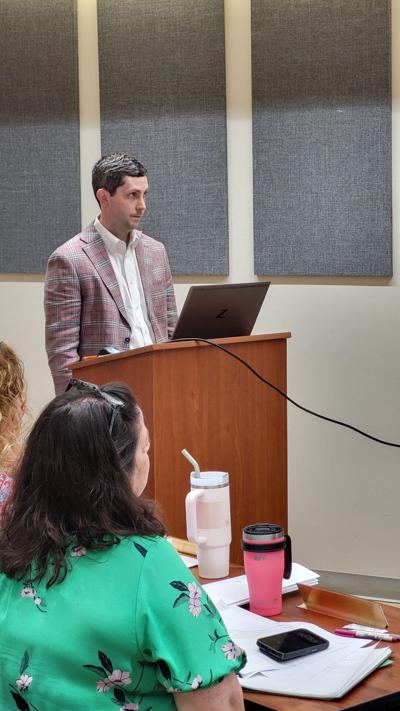
Next year, Burke County will conduct a property revaluation. Vice President of First Tryon Advisors Chazzo Habliston — the town’s financial consultant — said that, based on his observations and experience, property values throughout Burke may increase.
If the town keeps its proposed tax rate at 54.5 cents after revaluation, it could generate up to 25% more property tax revenue, according to Habliston.
Town leaders are counting on that additional revenue to help pay for the new public safety building.
“The most surefire way to fund this is property tax revenue,” Habliston said. “(It is) one of the few things you can guarantee, in terms of revenue coming into your budget every year.”
The public safety building project has been in the works since 2018. Valdese’s fire and police departments once shared space at 121 Faet St., but both were relocated in 2024 due to the building’s poor condition.
Valdese officials, administrative staff, department heads, and First Tryon Advisors spent about an hour reviewing financial projections during an April 14 budget retreat, using an interactive financial model designed to show how different decisions affect the town’s long-term outlook.
Currently, Valdese maintains a strong fund balance, about 125% of annual expenses, built up in part to support large capital projects, but relying heavily on that reserve to fund construction would quickly deplete it.
“We can’t afford all this out of fund balance,” Habliston said.
A large upfront payment would cause a sharp drop in reserves. A smaller contribution would simply delay that decline.
One scenario discussed involves financing the full $10 million project through a 20-year loan at about 5% interest.
Financial projections show the town could remain stable under that plan until around 2029, after which declining reserves could raise concerns with the Local Government Commission (LGC), which oversees the operations of counties and municipalities across the state.
“If the council is really against the tax increase, we’ll still need public safety,” said Chief Financial Officer Bo Weichel. “That’s something else (to think about).”
“Conversation for another day,” Habliston said.
TRADEOFFS ALREADY EMERGING
To help fund the project, officials are also considering reallocation of existing budget priorities.
One proposal would shift the town’s $375,000 street paving fund toward the building, relying instead on Powell Bill funds from the state to maintain roads.
That move raised concerns among council members about the long-term impact on infrastructure.
“This is a very large undertaking for the town,” Habliston said, noting that borrowing more and spreading costs over time may be the most practical approach.
For Valdese, the question is no longer whether to build, it’s how to pay for it. The answer will likely involve higher taxes, new debt, and years of careful financial management, as the town balances a critical public safety need against the limits of what it can afford.